

Columbine
Symbolism: Columbines traditionally symbolize foolishness due to their resemblance to a jester's cap, but they also represent desertion, anxious resolved love, and faith. In Christianity, they have been used to symbolize the seven gifts of the Holy Spirit.
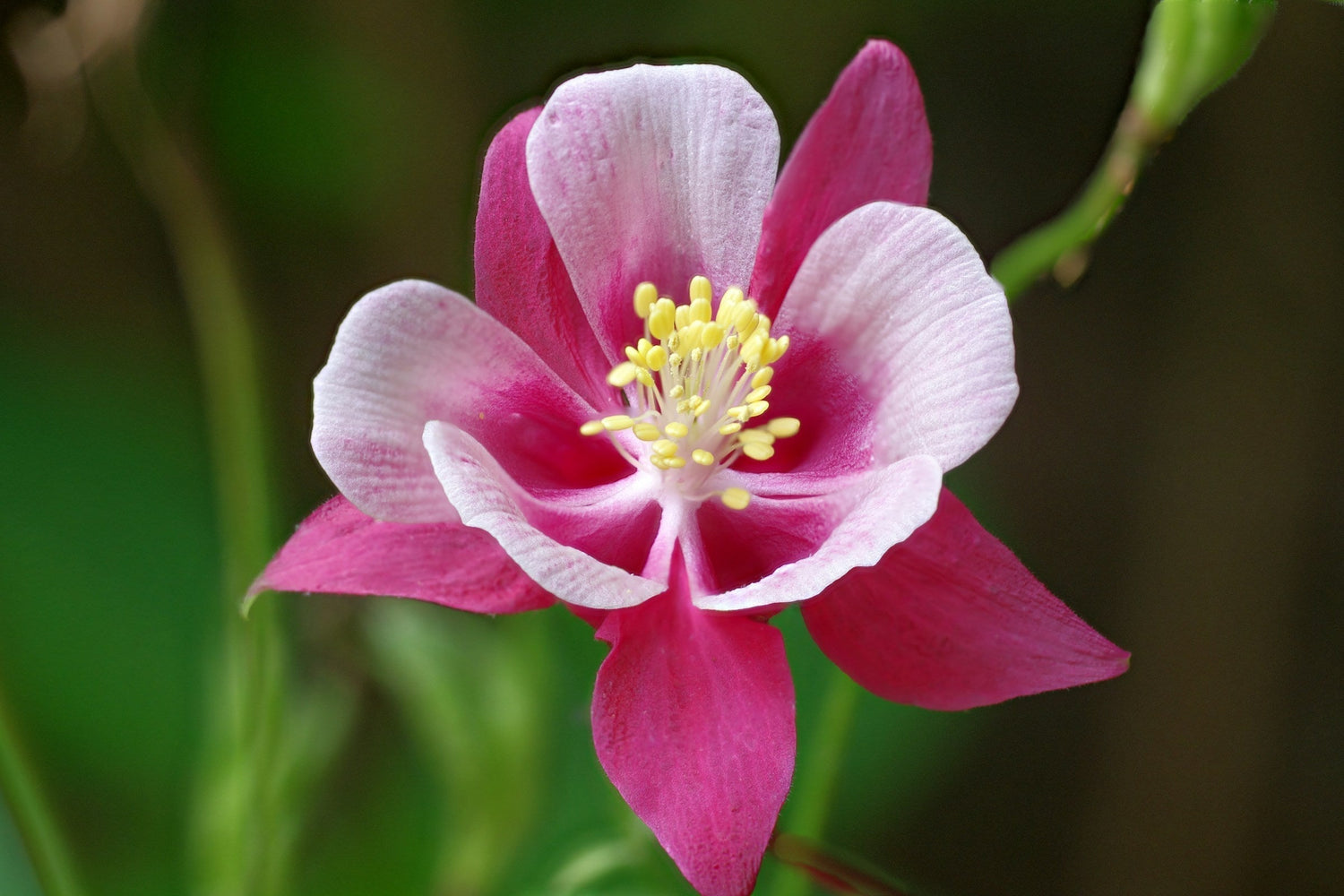
Description: Delightful perennial wildflowers recognizable by their distinct spurred petals that resemble a cluster of tiny birds. They feature delicate, layered, bell-shaped blossoms sitting atop slender stems with attractive, clover-like lobed foliage.
Named after: The name "Columbine" comes from the Latin word columbina, meaning "dove-like," because the inverted flower looks like five doves clustered together. The genus name, Aquilegia, comes from the Latin word for "eagle" (aquila), referring to the claw-like shape of the flower spurs.
Latin/Scientific name: Aquilegia
Native to: Meadow, woodland, and high-altitude mountain regions across North America, Europe, and Asia
Flowering period: Mid-spring to early summer.
Vase life: Typically 5 to 7 days. They are relatively delicate cut flowers that perform best when harvested just as the first buds open.
Popular use in floral arrangements or bouquets: Highly favored in whimsical, meadow-style, and loose wildflower arrangements. Their airy, dancing stems add exceptional movement, height, and organic texture to airy spring designs.
Care tips:
-
Clean cut: Trim stems at a sharp angle using clean shears and immediately place them into fresh, cool water.
-
Hydration: Use premium floral food to support bud opening and extend vase life.
-
Maintenance: Keep them away from warm drafts, direct sunlight, and ripening fruit. Strip any foliage that sits beneath the water line to ensure clarity and health.
Pet Toxicity: Toxic to both dogs and cats. The plants contain cyanogenic glycosides which can cause mild to moderate illness if ingested by pets.
When in stock in our shops: Mostly in early June