

Astrantia Major - Great Masterwort
Symbolism: Astrantia traditionally symbolizes strength, courage, and protection, as well as delicate beauty and innocence. Because of its perfect geometric form, where a multitude of tiny flowers cluster together to create a single blossom, it also evokes harmony, balance, and unity.
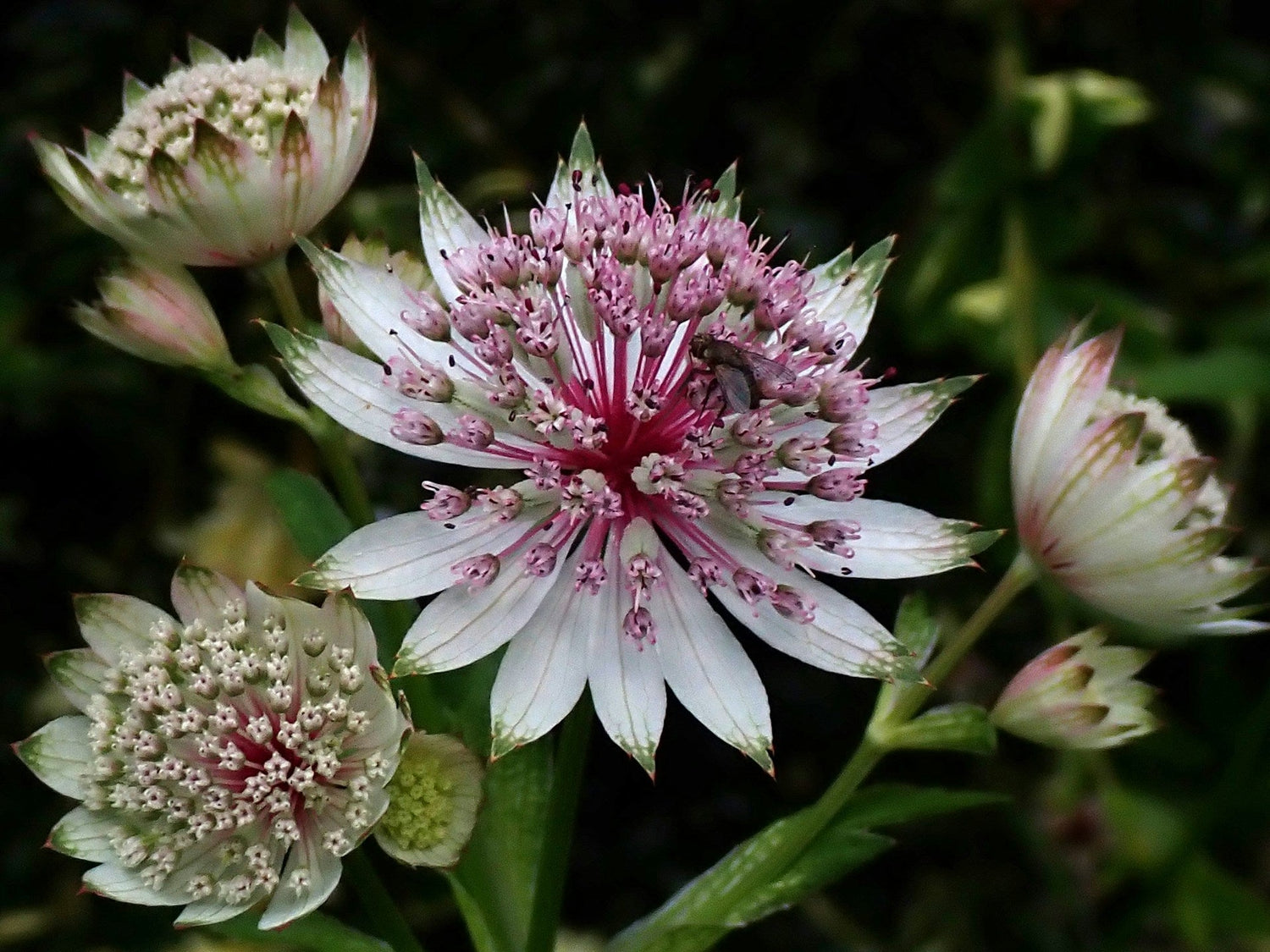
Description: A charming perennial wildflower, renowned for its unique, lace-like pincushion blooms. Each flower head features a dense cluster of tiny florets tightly packed together, surrounded by a starry collar of papery bracts that resemble miniature fireworks. Its delicate blossoms sit atop slender yet sturdy stems, rising above deeply lobed, dark green foliage.
Named after: The botanical name Astrantia comes from the Greek word “astron” (or the Latin “aster”), meaning "star," a direct reference to the star-like shape of its blooms. In old folklore, these flowers were often described as "stars that fell to earth." Its common English name, "Great Masterwort," points to its historical use in herbalism, where its roots were regarded as a "master" remedy for various ailments.
Latin/Scientific name: Astrantia major
Native to: Mountain meadows, woodland edges, and moist grassy areas throughout temperate regions of Central and Eastern Europe, as well as Western Asia (particularly prominent in the Alps and Pyrenees).
Flowering period: Early summer to early autumn (primarily June through September).
Vase life: Exceptional longevity, typically lasting 7 to 14 days. It is an incredibly resilient cut flower that also dries beautifully when hung upside down, making it perfect for everlasting arrangements.
Popular use in floral arrangements or bouquets: A massive favorite for weddings and florists alike. Thanks to its graphic, airy stems, Astrantia is ideal for adding intricate texture, lightness, and a poetic, meadow-style charm to designs. It acts as a flawless, textured filler that beautifully bridges the space between larger focal flowers like peonies, dahlias, or garden roses.
Care tips:
-
Clean cut: Trim stems at a sharp angle using a sharp knife or clean shears, and immediately place them into water to prevent the flower heads from drooping.
-
Hydration: Use a clean vase filled with lukewarm water. Adding premium flower food will maximize their brightness and support the opening of smaller, undeveloped buds.
-
Maintenance: Strip any lower foliage so that no leaves sit beneath the water line, preventing bacterial growth. Change the water and recut the stems every two days. Keep the arrangement away from warm drafts, direct sunlight, and ripening fruit (as they are sensitive to ethylene gas).
Pet Toxicity: Non-toxic. Astrantia is not known to be harmful to humans, nor is it toxic to your four-legged companions like dogs and cats.
When in stock in our shops: Through out the year.