

Ruscus - Ruscus hypophyllum; Ruscus aculeatus
Symbolism: Ruscus symbolizes endurance, protection, and lasting strength. Long valued for its resilience and longevity, it is often associated with good fortune, stability, and timeless greenery.
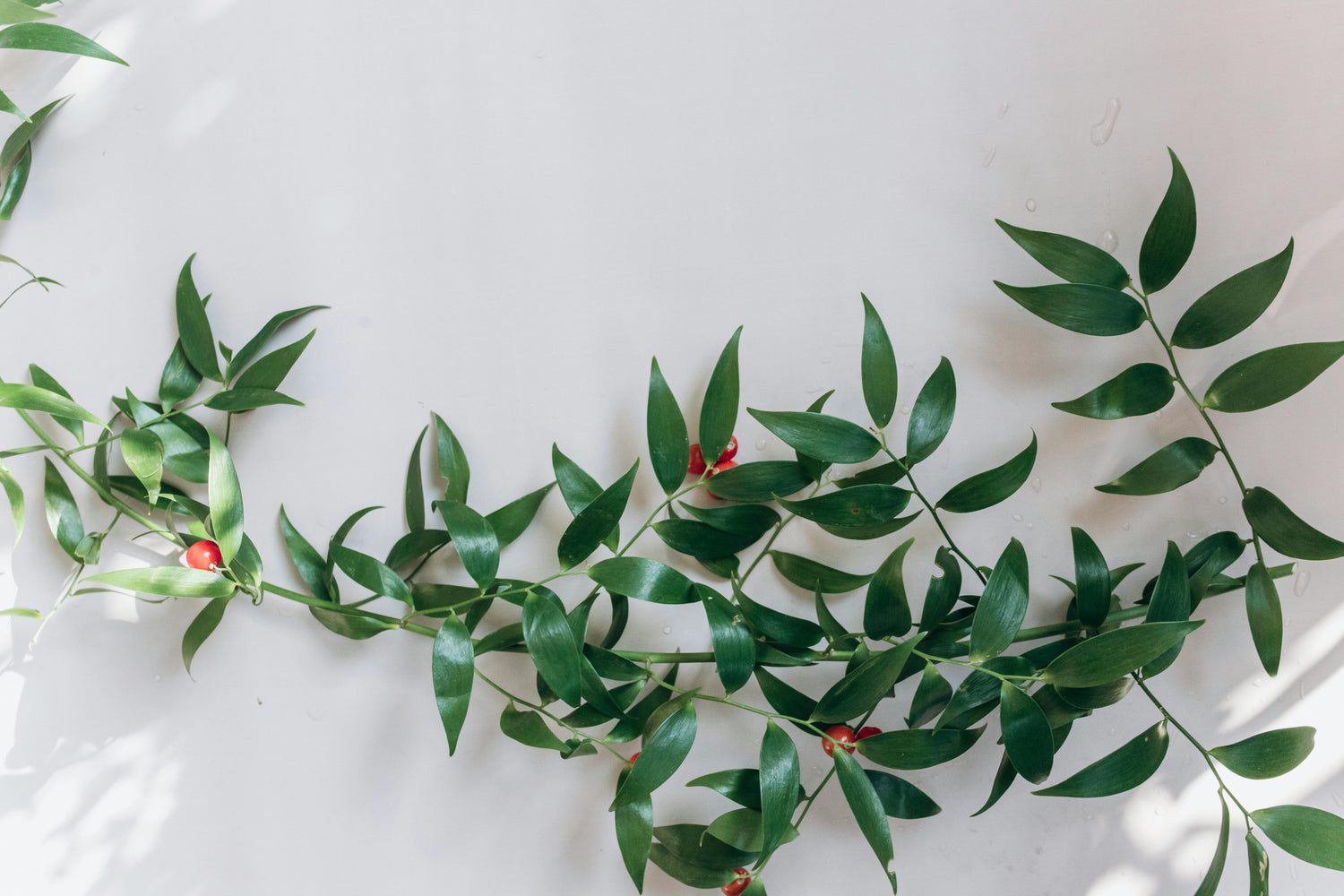
Description: Ruscus is a hardy evergreen foliage prized for its glossy, deep-green, lance-shaped “leaves” (technically flattened stems called cladodes). Its clean lines and durable texture make it an essential foliage for both classic and contemporary floral designs. Italian ruscus tends to have slightly broader, softer foliage, while Israeli ruscus is known for its longer stems and more pointed leaves.
Named after: The name Ruscus derives from Latin, historically used to describe prickly shrubs valued for protection and utility.
Latin/Scientific name: Ruscus hypophyllum (Italian ruscus) and Ruscus aculeatus (Israeli ruscus)
Native to: The Mediterranean region, including Southern Europe and parts of the Middle East
Flowering period: Ruscus is primarily grown for its foliage. Small, inconspicuous flowers may appear in spring, occasionally followed by red berries (rare in cut floral use).
Vase life: Exceptionally long-lasting, typically 2–4 weeks or more as cut greenery with proper care.
Popular use in floral arrangements or bouquets: Widely used as a base greenery in bouquets, centerpieces, sympathy arrangements, and event décor. Its durability and structure make it ideal for weddings, large installations, and long-lasting designs.
Care tips:
- Remove any foliage below the water line
- Change water regularly and recut stems as needed
- Keep arrangements away from direct heat and sunlight
- Ruscus requires minimal maintenance and holds well out of water for short periods
Pet Toxicity: Toxic to cats and dogs if ingested (may cause gastrointestinal upset)
When in stock in our shops: Available year-round.